
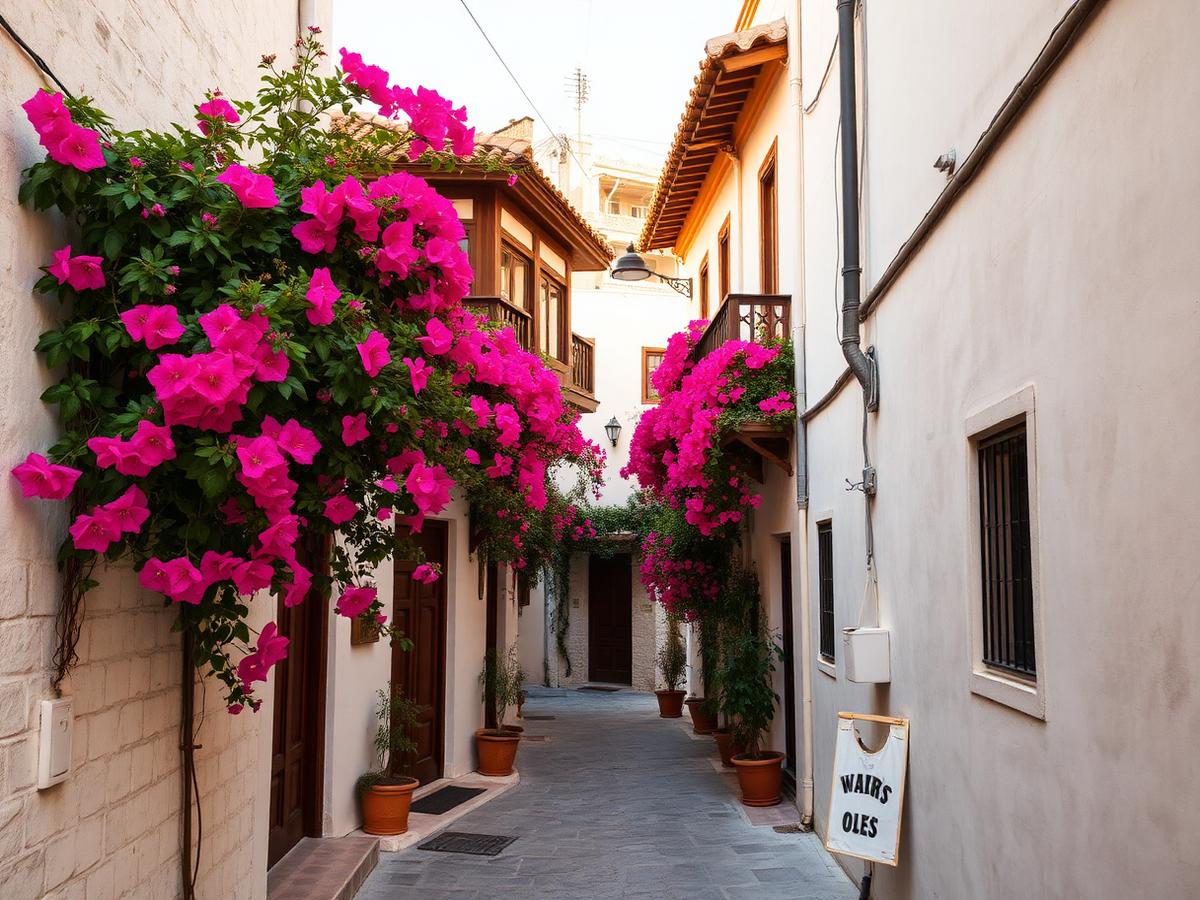
Antalya has been a working port for around two thousand years, and almost every era that passed through the eastern Mediterranean left something behind. Greek, Roman, Byzantine, Seljuk and Ottoman layers sit on top of one another inside the same few streets, which is why the old town rewards slow walking far more than a checklist.
Kaleiçi: the old town
Kaleiçi is the historic core, enclosed by the remains of the old city walls and wrapped around a small harbour that was the reason for the city in the first place. Inside it, narrow lanes run between wooden Ottoman houses with overhanging upper floors, many of them now restored as boutique hotels, cafés and workshops.
The best way to see it is without a route. Walk downhill toward the harbour, get lost deliberately, and let the sea find you. Mornings are quiet and good for photographs; evenings are for sitting somewhere with a view of the water.
Hadrian's Gate and the Roman city
The triumphal gate at the edge of the old town was built to mark a visit by the emperor Hadrian in the second century, and it remains the most complete Roman monument in the city — three marble arches you can still walk through, with the original road surface visible below the modern level.
Elsewhere in Kaleiçi, Roman and Byzantine masonry has been reused in walls, foundations and doorways. Once you start noticing it, it appears everywhere, which is a better introduction to the city's history than any single monument.
The Antalya Museum
Antalya's archaeological museum is one of the most significant in Turkey, holding sculpture, sarcophagi and everyday objects excavated from the ancient cities of the surrounding region. If you plan to visit any of those sites, an hour or two in the museum first makes the ruins far easier to read.
Opening hours and ticket arrangements change seasonally, so confirm before you set out. Allow more time than you expect; the Roman sculpture galleries in particular are hard to walk past quickly.
Ancient cities around Antalya
The plain and mountains around the city hold several major classical sites. Their theatres, stadiums, colonnaded streets and aqueducts survive in remarkable condition, and because they sit outside the city, they are usually far quieter than the old town.
These are day trips rather than afternoon walks. A driver, an organised tour or a hire car makes them straightforward; going in the early morning avoids both the heat and the coaches.
Living culture
History in Antalya is not only archaeological. Mosques, hamams, small museums and craft workshops are still in daily use, and the city runs a calendar of film, music and arts events, especially in the cooler months.
A hamam visit is worth planning for. It is a bathing ritual rather than a spa treatment: hot room, scrub, foam massage, then tea and a long rest. Historic hamams in the old town and contemporary versions both exist, and either is a good way to spend the hottest part of an afternoon.
Frequently asked
- What is Kaleiçi?
- Kaleiçi is Antalya's historic old town: a walled quarter of Ottoman houses, Roman and Byzantine remains and a small harbour, now full of cafés, shops and boutique hotels.
- Is Hadrian's Gate free to visit?
- The gate stands on a public street at the edge of the old town and is normally open to walk through. Museums and enclosed sites charge admission separately.
- How much time do you need for Antalya's old town?
- A half day is enough for a first walk through Kaleiçi and Hadrian's Gate. Adding the archaeological museum or an ancient city nearby turns it into a full day.
Ni Hotel Lara gives you a calm, modern base in the Lara district and leaves the historic centre as something you visit rather than sleep inside. Our team can help you plan the route, and our AI assistant is available around the clock for questions about transport and timing.